
 EN
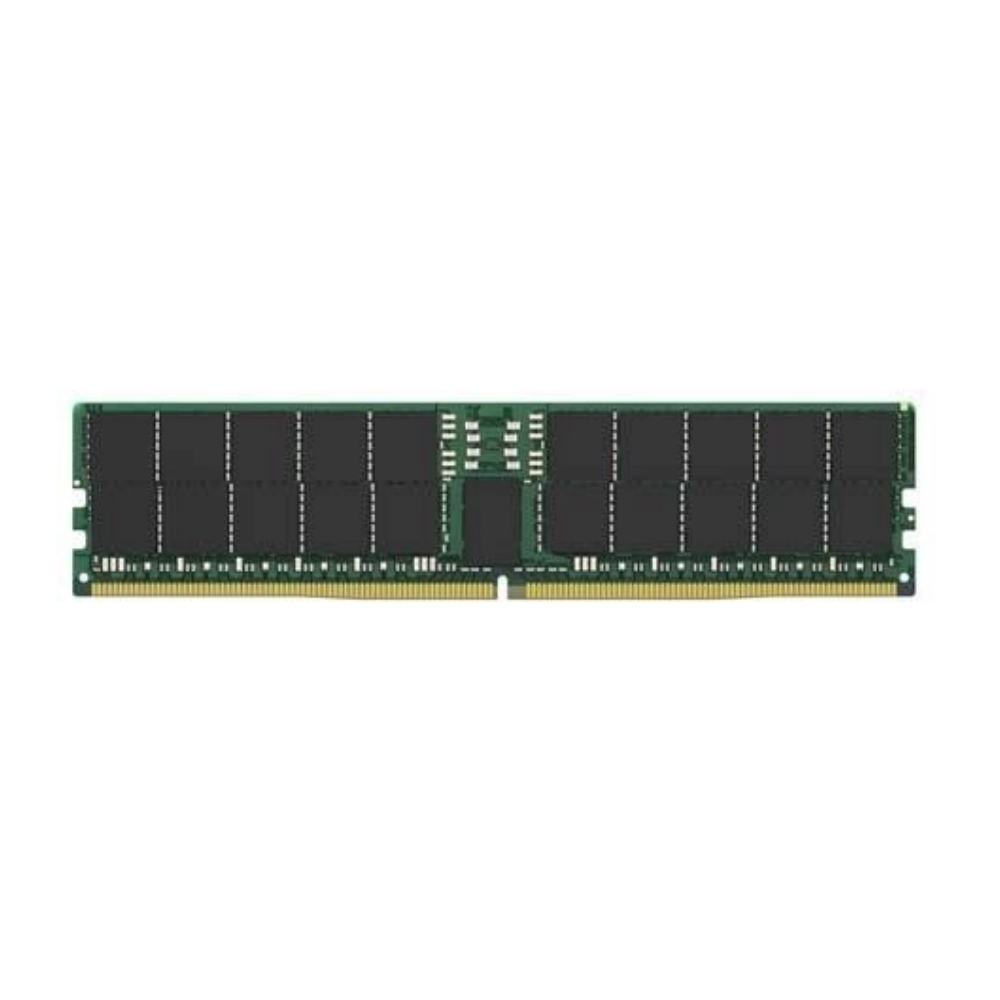
Enterprise servers handle mission-critical data and applications that demand absolute reliability and data integrity. The foundation of this reliability rests on choosing the right memory technology, particularly ECC registered memory designed specifically for demanding server environments. Unlike standard memory used in consumer computers, ECC registered memory incorporates error-correcting code technology that detects and corrects single-bit errors before they corrupt your data or crash your systems.

Data corruption in enterprise environments carries severe consequences—lost transactions, corrupted databases, system downtime, and regulatory compliance violations. ECC registered memory prevents these catastrophic failures by automatically identifying and fixing errors that would otherwise propagate silently through your critical systems. This proactive error management makes ECC registered memory an essential investment for any organization operating servers handling sensitive data or providing continuous service availability.
Understanding ECC Registered Memory Architecture
How ECC Memory Prevents Data Corruption
ECC stands for Error-Correcting Code, a technology embedded within memory modules that creates checksums for every data transaction. When data is written to ECC memory, the system calculates and stores mathematical checksums alongside the actual data. When the data is read back, the memory controller recalculates these checksums to verify integrity. If a single-bit error has occurred—caused by electrical interference, cosmic radiation, or component degradation—the ECC memory system detects and automatically corrects it without any system interruption or data loss.
Registered Memory Buffer Technology
Registered memory incorporates a register chip that acts as a buffer between the memory module and the server's memory controller. This register in ECC registered memory isolates electrical loads and improves signal integrity, allowing servers to support higher memory capacities and densities. The registered memory design reduces noise and extends memory stability, which is especially critical when a server contains dozens of memory modules. The combination of error correction with registered memory buffering creates a robust memory subsystem that enterprise servers depend on for years of uninterrupted operation.
Enterprise-Grade Data Protection and Business Continuity
Silent Data Corruption Prevention
Silent data corruption occurs when bit errors corrupt data without triggering system errors or crashes. A single corrupted bit in a database record, financial transaction, or medical imaging file can cause cascading damage. ECC memory prevents silent corruption by detecting and correcting these errors invisibly. Without ECC memory, corruption might go unnoticed until it affects business operations, audit trails, or regulatory compliance. Organizations running financial systems, healthcare databases, scientific computing, or telecommunications infrastructure cannot tolerate such risks, making ECC memory mandatory rather than optional.
Regulatory Compliance and Data Integrity Standards
Many industries mandate memory reliability standards as part of regulatory frameworks. Healthcare organizations following HIPAA, financial institutions under banking regulations, and government agencies require documented data protection mechanisms. ECC registered memory satisfies these compliance requirements by providing verifiable error detection and correction throughout the memory subsystem. Auditors and compliance officers expect enterprise memory solutions to include error-correcting technology. Deploying ECC memory demonstrates your organization's commitment to data integrity and provides documented protection against memory-related data compromise.
Performance, Stability, and Total Cost of Ownership
Long-Term Server Reliability and Reduced Downtime
Enterprise servers running ECC registered memory demonstrate significantly higher uptime rates and more stable performance over extended periods. The memory error detection capabilities identify failing components before they cause system crashes, enabling proactive maintenance scheduling. Servers with standard non-ECC memory face unpredictable failures and data corruption events. The cost of server downtime—lost productivity, failed transactions, reputation damage—vastly exceeds the marginal cost of ECC registered memory. A single unplanned outage caused by undetected memory errors can cost tens of thousands of dollars, while ECC memory prevents these expensive incidents by ensuring memory integrity across the server's operational lifespan.
Scalability and Multi-Socket Server Requirements
Large enterprise servers with multiple sockets and hundreds of memory modules face exponentially higher memory error probabilities. A high-performance memory configuration with 96 DIMM slots significantly increases the statistical likelihood of encountering bit errors. Each additional memory module contributes to overall error probability. Registered ECC memory becomes increasingly critical as memory capacity scales. Organizations deploying massive memory footprints for in-memory databases, analytics workloads, or virtualization platforms must use ECC registered memory to maintain reliability proportional to their memory investment. The memory error rate grows with total memory volume, making error correction not just beneficial but absolutely essential.
FAQ
Does ECC Registered Memory Reduce Server Performance?
No, ECC registered memory operates with negligible performance impact. Modern server processors and memory controllers handle ECC calculations in parallel with regular memory operations. Any latency increase is measured in nanoseconds and is completely transparent to applications. The stability and reliability gains from ECC memory far outweigh minimal performance considerations. Enterprise workloads benefit from ECC memory precisely because corruption avoidance eliminates catastrophic performance drops and unplanned restarts caused by undetected memory errors.
Can I Mix ECC and Non-ECC Memory in Enterprise Servers?
Most enterprise server architectures do not support mixing ECC and non-ECC memory modules. Servers designed for ECC registered memory require all memory to be ECC-compliant, and the entire memory subsystem operates together under the same error correction protocol. Attempting to mix memory types typically results in system failures or non-recognition of incompatible memory modules. Always verify your server's memory requirements with manufacturer documentation and deploy uniform memory configurations to ensure proper ECC memory functionality.
What Is the Cost Difference Between ECC and Standard Memory?
ECC registered memory typically costs 10–20% more than standard non-ECC memory, a premium that reflects the additional error-correction circuitry and registered buffering technology. However, this marginal memory cost is completely justified by the risk mitigation value. A single server crash from undetected memory errors costs far more than the initial memory premium. Organizations protecting critical data and guaranteeing service availability view ECC registered memory as mandatory infrastructure investment rather than optional cost.
