
 EN
EN
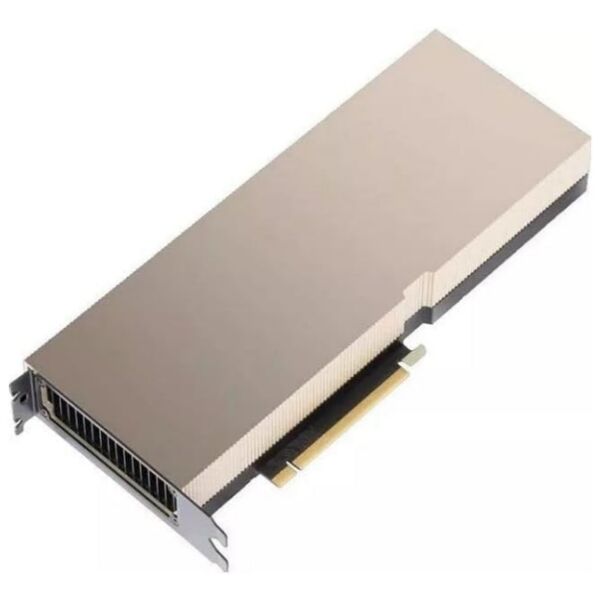
Selecting the right AI platform is one of the most consequential infrastructure decisions a business can make today. Whether your team is building computer vision pipelines, training large language models for NLP applications, or developing predictive analytics engines for operational forecasting, the underlying hardware and software stack directly determines how fast you can iterate, how accurate your models can become, and how cost-effectively you can scale. The stakes are high, and the differences between a well-matched AI platform and a misaligned one compound over time in the form of slower training runs, resource bottlenecks, and missed deployment windows.
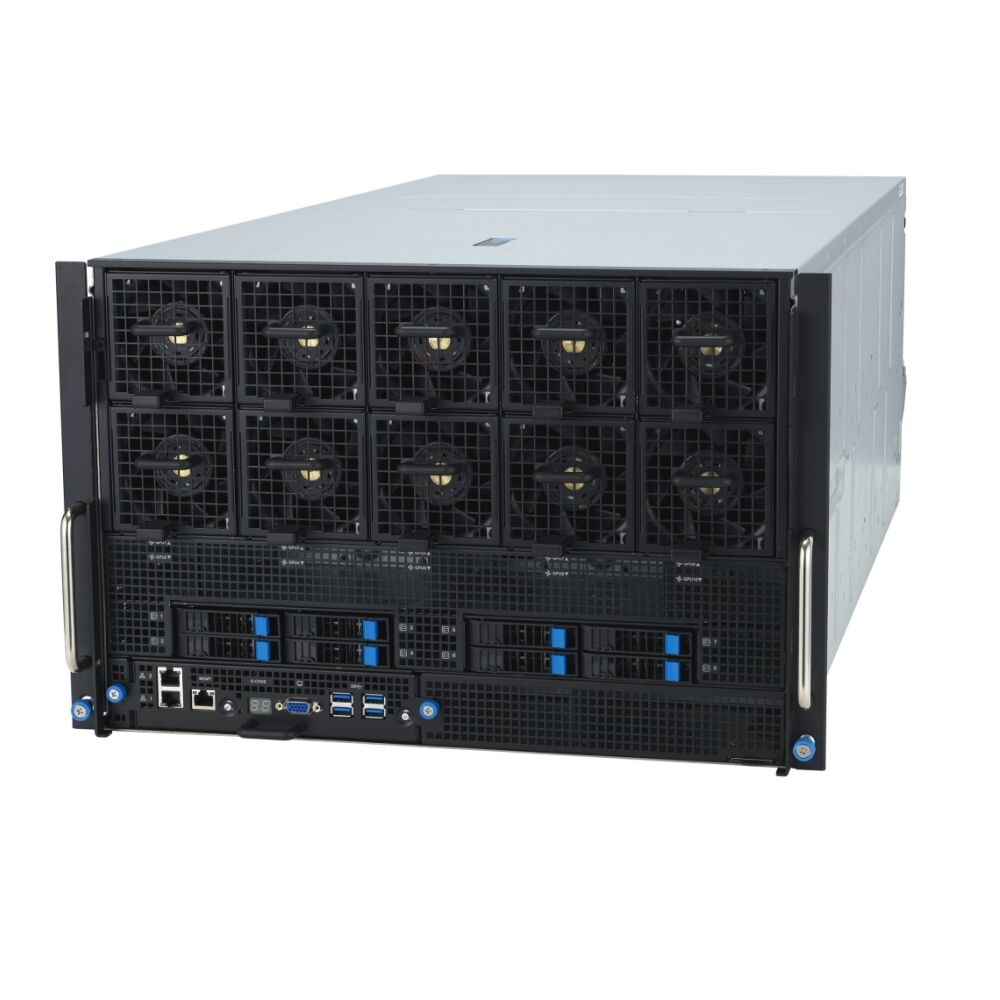
This guide addresses the selection logic that engineering leaders, AI architects, and procurement teams need to navigate the AI platform landscape with confidence. Rather than offering a generic checklist, the goal here is to connect the specific computational demands of computer vision, NLP, and predictive analytics directly to the platform attributes that matter most. Understanding these connections is what separates a strategic infrastructure decision from an expensive trial-and-error process.
Understanding Workload Profiles Before Choosing an AI Platform
Computer Vision Workloads and Their Hardware Demands
Computer vision is among the most GPU-intensive workload categories that any AI platform must support. Tasks like real-time object detection, semantic segmentation, and 3D scene reconstruction involve dense tensor operations that demand high VRAM capacity, fast memory bandwidth, and multi-GPU parallelism. When evaluating an AI platform for computer vision, the number and generation of GPUs available per node is a primary filter criterion, not a secondary consideration.
Training large vision models — especially transformer-based architectures like Vision Transformers — requires sustained throughput across many hours or days. An AI platform that cannot maintain thermal stability and consistent clock speeds under long training runs will introduce variability that degrades reproducibility. Thermal design, power delivery, and system cooling architecture are therefore as important as raw compute specifications when assessing platform suitability for computer vision use cases.
Inference at scale adds another dimension. Edge deployment and real-time processing scenarios demand low-latency responses, meaning the AI platform must support efficient batching, quantization-aware frameworks, and potentially TensorRT or similar inference optimization layers. Platforms that integrate tightly with these tools deliver measurably faster deployment cycles.
NLP Workloads and Memory Architecture Requirements
Natural language processing at enterprise scale — from fine-tuning large language models to building retrieval-augmented generation systems — places a different kind of stress on an AI platform. The dominant requirement here is large addressable GPU memory, ideally with high-bandwidth interconnects between accelerators. Models with billions of parameters simply cannot be trained or even loaded on platforms with insufficient VRAM per GPU or poor inter-GPU communication bandwidth.
NVLink, PCIe 5.0, and high-speed fabric interconnects are the technologies that separate capable NLP platforms from underpowered ones. When a platform supports tensor parallelism and pipeline parallelism natively through its hardware topology, teams can distribute model layers across GPUs efficiently and cut training time dramatically. Evaluators should look at not just peak memory capacity but memory access latency and the interconnect topology when choosing an AI platform for serious NLP work.
Beyond training, NLP inference workloads often require serving models to many concurrent users with low response latency. This places demands on CPU-to-GPU data transfer speeds, system RAM capacity, and network throughput — all areas where enterprise-grade AI platform hardware outperforms consumer-grade alternatives by a wide margin.
Predictive Analytics and Balanced Compute-Storage Profiles
Predictive analytics workloads, including time-series forecasting, anomaly detection, and recommendation engines, typically require a more balanced AI platform profile compared to pure deep learning tasks. These workloads often combine classical machine learning algorithms with neural network components, meaning CPU compute, fast NVMe storage, and system memory all play meaningful roles alongside GPU acceleration.
An AI platform chosen for predictive analytics must handle large dataset ingestion, feature engineering pipelines, and repeated model evaluation cycles without creating I/O bottlenecks. The storage subsystem — including NVMe drive count, total capacity, and sequential read performance — significantly affects how quickly training data can be fed to accelerators. Bottlenecks at the storage layer can negate GPU performance advantages entirely.
Key Evaluation Criteria for an AI Platform Selection
GPU Architecture and Generational Fit
Not all GPUs are equal in terms of their suitability for different AI workloads. When selecting an AI platform, matching GPU architecture to workload type is critical. For deep learning dominated by transformer models, architectures with dedicated Tensor Cores and support for BF16 or FP8 precision formats offer significant efficiency advantages. For scientific computing and simulation-heavy predictive analytics, FP64 performance may take priority.
The generational gap between GPU families is substantial. Each generation introduces improvements in memory bandwidth, compute density, and power efficiency that translate directly to training speed and inference throughput. An AI platform built around current-generation accelerators will sustain relevance across a longer deployment horizon, reducing the frequency of costly hardware refresh cycles.
Buyers should also consider the number of GPUs a single platform node can support. High-density, multi-GPU servers — those capable of hosting eight or more accelerators per chassis — provide significantly better compute-per-rack-unit ratios for organizations scaling AI workloads in constrained data center spaces.
System Architecture: CPU, Memory, and I/O Balance
A powerful GPU cluster is only as effective as the system architecture that feeds it data and manages workload coordination. An AI platform with a strong CPU foundation — particularly one based on high core-count server-class processors — ensures that data preprocessing, pipeline orchestration, and model serving tasks do not create systemic bottlenecks. Dual-socket platforms with many cores provide the threading headroom needed for complex multi-stage AI pipelines.
System memory capacity and channel count determine how much data can be held in fast-access memory during training and inference. For NLP models that require large context windows or for predictive analytics systems processing wide feature sets, insufficient system RAM forces expensive data swaps that slow the entire workflow. An appropriately sized AI platform will have memory capacity proportional to its GPU count and the expected model sizes it will serve.
PCIe lane availability governs how many high-speed peripherals — GPUs, NVMe drives, network cards — the platform can sustain simultaneously at full bandwidth. Platforms constrained in PCIe bandwidth will force trade-offs between storage throughput and network performance that negatively affect multi-node training jobs and high-throughput inference deployments.
Software Ecosystem Compatibility
Hardware capability only delivers value when the surrounding software ecosystem is well-integrated. An AI platform should support major deep learning frameworks — PyTorch, TensorFlow, JAX — out of the box, with driver stacks and CUDA or ROCm libraries that are current and actively maintained. Outdated firmware or incompatible driver versions create friction that slows team velocity and introduces subtle performance regressions.
Container and orchestration compatibility is equally important for teams deploying AI workloads in production. An AI platform that integrates cleanly with Kubernetes, Docker, and ML workflow tools like Kubeflow or MLflow enables faster experimentation cycles and more reliable production deployments. The ability to provision, monitor, and scale AI workloads programmatically is a major operational advantage for growing teams.
Scalability and Future-Proofing Your AI Platform Investment
Horizontal and Vertical Scaling Paths
An AI platform must not only meet today's workload demands but also provide a credible path for scaling as model complexity and data volumes grow. Vertical scaling — adding more GPUs, memory, or storage within a single node — is the most straightforward expansion path. Platforms designed with modular architecture, standard form factors, and expandable PCIe slots preserve this option without requiring full system replacement.
Horizontal scaling — adding more nodes and distributing workloads across a cluster — requires the AI platform to support high-speed inter-node networking. InfiniBand and high-bandwidth Ethernet fabrics enable the collective communication operations that underpin distributed training. Selecting a platform with the right networking infrastructure from the outset avoids costly retrofitting as workload scale increases.
Organizations planning for significant AI growth should evaluate whether the platform vendor provides a coherent scaling roadmap and whether the platform's management layer supports cluster orchestration natively. An AI platform designed specifically for heavy multi-GPU workloads in rack-mounted configurations offers the combination of density, cooling, and interconnect capability required to scale without compromise.
Total Cost of Ownership Across Workload Types
Acquisition cost is only one dimension of AI platform value. Power consumption, cooling requirements, maintenance overhead, and software licensing costs collectively define total cost of ownership over a platform's useful life. High-density AI servers that deliver more compute per watt and per rack unit dramatically reduce the recurring operational costs associated with power and cooling in data center environments.
For organizations running heterogeneous AI workloads — combining computer vision training jobs with NLP inference services and predictive analytics batch processing — a platform's ability to efficiently multiplex resources across these diverse workloads reduces idle time and improves utilization rates. Underutilized AI platforms are among the most expensive infrastructure mistakes in the B2B technology context.
Matching AI Platform Selection to Organizational Readiness
Team Capability and Operational Complexity
Even the most capable AI platform delivers limited value if the organization lacks the technical talent to configure, optimize, and maintain it. Selection should account for the operational complexity each platform imposes. Highly customizable bare-metal platforms offer maximum performance but require experienced system administrators and ML engineers. Managed platform alternatives reduce operational burden but often constrain customization and may introduce latency through virtualization layers.
Teams early in their AI platform journey may benefit from platforms with strong vendor support, pre-configured software environments, and active user communities that accelerate problem resolution. As internal capabilities mature, teams typically migrate toward more customized deployments that extract maximum performance from purpose-built AI hardware.
Deployment Environment: On-Premise vs. Hybrid Considerations
The deployment environment shapes AI platform selection in important ways. On-premise deployment provides data sovereignty, predictable latency, and better economics for sustained high-utilization workloads — all of which matter for production computer vision and NLP systems. The AI platform must fit within available rack space, power budgets, and cooling infrastructure, making physical specifications directly relevant to selection decisions.
Hybrid approaches — running baseline workloads on owned AI platform hardware while bursting to cloud resources during peak demand — require careful architectural planning. The AI platform must support containerized workloads that can be migrated between on-premise and cloud environments without significant re-engineering. Organizations with variable workload patterns and periodic large-scale training runs often find this hybrid model economically optimal.
Ultimately, the right AI platform selection aligns hardware capability, software ecosystem maturity, operational readiness, and deployment environment into a coherent strategy. No single platform fits every organization or every workload type. The discipline of structured evaluation — matching platform attributes to workload-specific requirements — is what leads to decisions that remain sound as both workloads and platforms evolve.
FAQ
What makes an AI platform suitable for computer vision versus NLP workloads?
Computer vision workloads prioritize GPU count, VRAM capacity, and thermal stability during long training runs. NLP workloads additionally require high inter-GPU memory bandwidth and support for large-scale model parallelism. An AI platform configured for NLP needs larger per-GPU memory and faster GPU interconnects, while computer vision benefits most from raw parallel compute throughput and stable sustained performance across extended sessions.
How important is the CPU in an AI platform used primarily for deep learning?
While GPUs handle the bulk of deep learning computation, the CPU remains critical for data preprocessing, pipeline management, and inference serving tasks. A high-core-count server CPU ensures that data ingestion and augmentation pipelines can keep GPU accelerators fully fed. In mixed workload environments — where predictive analytics and neural network training coexist on the same AI platform — a capable CPU prevents systemic bottlenecks that would otherwise limit overall throughput.
Can a single AI platform efficiently handle computer vision, NLP, and predictive analytics simultaneously?
Yes, provided the AI platform is sufficiently provisioned and the workload scheduler is properly configured. High-density, multi-GPU platforms with large system memory, fast NVMe storage, and high-bandwidth networking can handle heterogeneous workloads through GPU partitioning and containerized resource allocation. The key requirement is that the AI platform has sufficient total capacity so that concurrent workloads do not create contention that degrades any single pipeline's performance.
What role does storage play in AI platform selection for predictive analytics?
Storage performance is particularly critical for predictive analytics workloads, which often involve large tabular datasets, repeated feature engineering operations, and iterative model training cycles. An AI platform with multiple high-capacity NVMe drives in a RAID or striped configuration delivers the sequential read throughput needed to sustain GPU utilization during data-intensive training runs. Inadequate storage bandwidth remains one of the most common and underestimated performance bottlenecks in production AI deployments.
Table of Contents
- Understanding Workload Profiles Before Choosing an AI Platform
- Key Evaluation Criteria for an AI Platform Selection
- Scalability and Future-Proofing Your AI Platform Investment
- Matching AI Platform Selection to Organizational Readiness
-
FAQ
- What makes an AI platform suitable for computer vision versus NLP workloads?
- How important is the CPU in an AI platform used primarily for deep learning?
- Can a single AI platform efficiently handle computer vision, NLP, and predictive analytics simultaneously?
- What role does storage play in AI platform selection for predictive analytics?