
 EN
EN

Every organization managing large volumes of data eventually confronts the same fundamental tension: how do you keep storage affordable without sacrificing the speed and reliability that critical workloads demand? The answer lies in understanding that not all data is equal, and therefore not all storage should be treated equally. When you start thinking carefully about cost per terabyte alongside actual performance requirements, it becomes possible to build a storage architecture that is both economically sound and operationally effective. This balance is not an accident — it is the result of deliberate decisions made at the infrastructure design stage.
The distinction between archival data and active data is at the heart of this challenge. Archival data sits largely dormant, accessed infrequently but retained for compliance, audit, or historical analysis purposes. Active data, on the other hand, drives daily business operations and requires fast, consistent, and often concurrent access. Conflating the two in a single-tier storage strategy is one of the most common and costly mistakes enterprises make. A well-structured tiered approach, guided by a clear understanding of cost per terabyte at each tier, allows organizations to right-size their investments and extract maximum value from every gigabyte stored.
Understanding the Two Sides of the Equation
What Cost per Terabyte Actually Measures
The cost per terabyte metric sounds deceptively simple, but it carries significant complexity in practice. On the surface, it represents the total expenditure — hardware, licensing, power, cooling, and management — divided by total usable storage capacity. However, a low cost per terabyte figure on a specification sheet does not always translate to a low total cost of ownership when performance requirements are factored in. A dense, high-capacity HDD array may offer an attractive cost per terabyte for archival workloads, but if it is asked to serve latency-sensitive active applications, the hidden costs of inefficiency, slower throughput, and potential downtime quickly erode those savings.
Organizations must evaluate cost per terabyte within the specific context of each data tier. For archival storage, the primary drivers are raw capacity, long-term reliability, and minimal operational overhead. For active storage, performance benchmarks such as IOPS, throughput, and latency tolerance are non-negotiable factors that affect whether a low cost per terabyte solution is actually viable. Treating these two contexts as interchangeable leads to overprovisioning in one area and underperforming in another — both of which represent waste.
Performance Requirements Are Not One-Size-Fits-All
Performance requirements are defined by the applications and users that depend on the data, not by the storage system itself. A database serving real-time transactions demands consistent sub-millisecond response times and high IOPS. A video surveillance archive or a regulatory compliance repository, by contrast, may only need to retrieve data once every few months, making throughput during bulk retrieval far more important than low latency during random access. Recognizing this distinction is what enables a rational conversation about cost per terabyte as it relates to specific workload categories.
Performance tiers also evolve over time as data ages. Data generated today may be active and performance-intensive for the first 30 to 90 days, then transition to a warm tier where access is periodic, and finally move to cold archival storage where it may remain for years. Building policies that reflect this lifecycle — and that track cost per terabyte across each stage — is the foundation of a mature data management strategy. Without this lifecycle awareness, storage investments become static and misaligned with actual usage patterns.
Archival Storage: Optimizing Cost per Terabyte Without Compromising Integrity
The Case for High-Density HDD in Archival Tiers
For archival workloads, high-density hard disk drive solutions remain the most compelling option when evaluated on a cost per terabyte basis. Modern high-capacity HDDs deliver enormous storage volumes at a fraction of the price per terabyte compared to flash or SSD-based systems. When the access pattern is infrequent and sequential — as is typical in archival contexts — the rotational latency of spinning disk becomes irrelevant, and the economic advantage of HDD becomes dominant. Organizations storing petabytes of compliance records, historical transaction logs, medical imaging archives, or cold backup copies benefit enormously from this calculus.
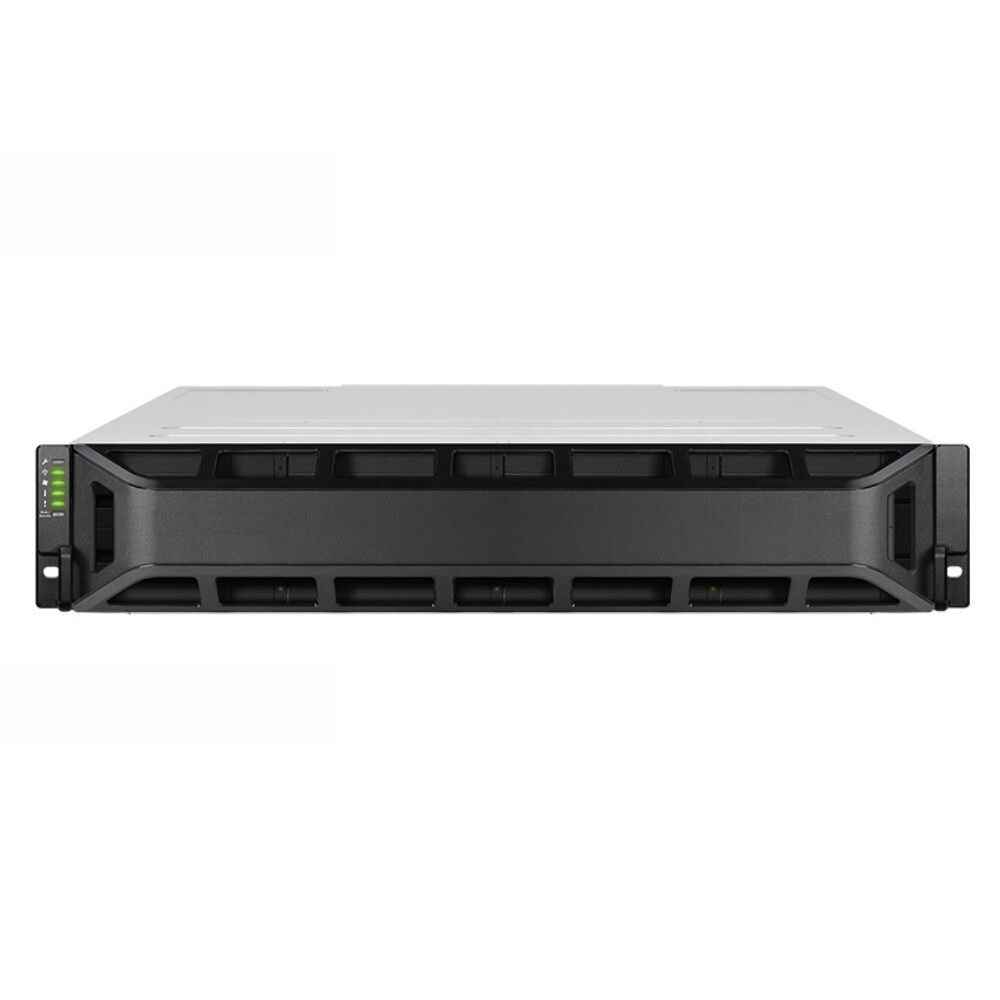
The key consideration at the archival tier is not raw speed but rather data integrity, long-term reliability, and the ability to sustain high sequential throughput during bulk ingest or retrieval events. Solutions that support large drive counts in a space-efficient enclosure directly reduce the cost per terabyte at scale. Systems like the cost per terabyte-optimized unified storage platforms are designed precisely for this context — delivering high capacity density, enterprise-grade RAID protection, and efficient power profiles that keep operational costs in check over multi-year deployment cycles.
It is also important to account for data integrity mechanisms when evaluating archival storage costs. Silent data corruption is a genuine risk over long retention periods, and storage solutions that lack end-to-end data protection features can introduce hidden costs through data loss events. Investing in architectures that include checksumming, redundant parity, and proactive drive health monitoring may add a modest amount to the headline cost per terabyte figure, but they protect the far larger cost of the data itself.
Tiered Storage Policies and Automated Data Lifecycle Management
Effective management of archival data cost begins with automated tiering policies. Rather than relying on manual intervention to move cold data off expensive active storage, intelligent storage platforms can monitor access patterns and automatically migrate infrequently accessed data to lower-cost per terabyte tiers. This automation reduces administrative burden while ensuring that storage resources are continuously aligned with actual data temperature. The result is a dynamic system that optimizes spending without requiring constant human oversight.
Data classification at the point of ingest is equally valuable. When metadata tagging and policy rules are defined upfront, data flows naturally into the correct tier from creation, avoiding the accumulation of stale data on high-performance storage that inflates cost per terabyte across the active tier unnecessarily. Governance frameworks that mandate data classification as part of the data creation workflow transform lifecycle management from a reactive cleanup task into a proactive cost optimization discipline.
Active Data Storage: When Performance Justifies a Higher Cost per Terabyte
Identifying Workloads That Demand Premium Performance
Active data storage serves the applications that power daily business operations, and for these workloads, a higher cost per terabyte is often fully justified when weighed against the cost of performance-related failures. Database servers handling transactional workloads, virtualization platforms running dozens of concurrent virtual machines, and analytics engines processing real-time data streams all require storage that can deliver consistent, high-speed access without bottlenecks. In these contexts, the performance-per-dollar metric becomes more relevant than raw cost per terabyte alone.
The consequences of underpowering active storage are measurable. Application latency directly translates into user experience degradation, reduced transaction throughput, and in mission-critical environments, potential revenue loss or regulatory penalties. The investment premium paid for high-performance storage at the active tier should be evaluated against these risk-weighted costs, not simply compared to the per-terabyte price of archival alternatives. When this full-cost accounting is applied, the apparent gap in cost per terabyte between active and archival storage narrows considerably in terms of business value delivered.
Hybrid Architectures That Bridge the Gap
Hybrid storage architectures, which combine SSD caching or tiering with high-capacity HDD backends, offer a compelling middle ground for workloads that are partially active and partially warm. By placing frequently accessed data blocks on faster flash media and less accessed data on lower-cost per terabyte HDD volumes within the same unified system, hybrid platforms can deliver near-SSD performance for hot data while maintaining the economic efficiency of HDD for the broader dataset. This approach is particularly effective for mixed workloads common in enterprise environments — file services, backup repositories with periodic restore requirements, and media asset management platforms.
Unified storage platforms that support both block and file protocols across multiple tiers within a single management interface also reduce the operational overhead associated with maintaining separate archival and active storage systems. When the total cost per terabyte calculation includes the labor cost of managing disparate systems, the consolidation premium of a well-designed unified platform frequently becomes cost-neutral or even favorable. Reducing complexity is itself a form of cost optimization.
How to Build a Balanced Storage Strategy
Conducting a Data Audit Before Making Storage Decisions
Before any storage investment decision can be meaningfully evaluated on a cost per terabyte basis, organizations need a clear picture of their current data landscape. A thorough data audit should identify the total volume of data across all storage locations, classify data by access frequency and temperature, establish retention timelines for each category, and map existing storage costs to specific data types. Without this foundation, procurement decisions are made in the dark, and the risk of misaligned spending is high.
The audit process also surfaces opportunities for immediate cost reduction. In most enterprise environments, a significant percentage of data stored on high-performance active storage is actually cold or orphaned — never accessed, never to be accessed again, but consuming expensive capacity. Migrating or deleting this data immediately improves the effective cost per terabyte of the active tier without requiring any new infrastructure purchases. Data hygiene, in this sense, is one of the highest-return storage optimization activities available.
Defining SLAs That Drive Tier Placement Decisions
Service level agreements, both internal and external, should drive storage tier placement decisions rather than default to convenience or inertia. Each application or data category should have a defined recovery time objective, recovery point objective, and acceptable latency profile. These SLA parameters map directly to storage tier requirements and, by extension, to acceptable cost per terabyte at each tier. When SLAs are undefined or poorly understood, storage administrators tend to err on the side of over-provisioning performance, which drives up cost per terabyte without delivering proportional business value.
Formalizing this SLA-to-tier mapping also creates a sustainable governance model. As applications evolve, data volumes grow, and business priorities shift, the SLA framework provides a consistent decision basis for re-evaluating storage placements. Organizations that establish this discipline early find that managing storage cost and performance tradeoffs becomes a routine operational activity rather than a periodic crisis response.
Evaluating Total Cost of Ownership Beyond Purchase Price
A common pitfall in storage procurement is fixating on the upfront cost per terabyte figure while underweighting ongoing operational costs. Power and cooling expenses for dense storage arrays can represent a substantial fraction of total cost of ownership over a five-year deployment cycle. Management software licensing, support contracts, rack space, and the labor costs of administration all contribute to the true cost per terabyte experienced by the organization over time. Any honest comparison between storage options must account for these factors across the expected deployment lifespan.
Solutions that offer energy-efficient drive spin-down capabilities for archival tiers, consolidated management interfaces for multiple tiers, and scalable expansion without requiring full system replacement consistently deliver lower total cost per terabyte in practice, even when their initial acquisition cost appears higher than simpler alternatives. The five-year TCO lens is the correct frame for evaluating enterprise storage investments, not the purchase invoice alone.
FAQ
What is a realistic cost per terabyte target for archival storage in enterprise environments?
Cost per terabyte for enterprise archival storage varies based on capacity, redundancy level, and operational requirements, but high-density HDD-based solutions typically offer the lowest cost per terabyte at scale. The key is to evaluate the fully loaded cost including power, cooling, and management software across the expected retention period rather than comparing raw drive prices alone. Organizations storing multiple petabytes can significantly reduce their effective cost per terabyte by consolidating onto purpose-built high-capacity unified storage platforms.
How often should organizations re-evaluate their storage tier assignments?
Storage tier assignments should be reviewed at least annually as part of a formal data governance cycle, and more frequently for environments experiencing rapid data growth or significant application changes. Automated tiering policies can handle continuous micro-adjustments based on real-time access patterns, but strategic reviews should assess whether the overall tier structure, capacity allocations, and cost per terabyte targets still align with current and projected business requirements. Data that was active two years ago may now be a strong candidate for archival migration.
Can unified storage platforms effectively serve both archival and active data workloads simultaneously?
Yes, modern unified storage platforms with multi-tier architectures are specifically designed to serve both workload types within a single system. By combining SSD caching for active data with large-capacity HDD volumes for warm and archival data, these platforms allow organizations to optimize cost per terabyte across the full data spectrum without managing separate systems. The critical requirement is that the platform provides sufficient performance isolation between tiers so that archival operations do not degrade active workload response times.
What role does data compression and deduplication play in reducing cost per terabyte?
Data reduction technologies such as inline compression and deduplication can materially improve effective cost per terabyte, particularly for active data tiers where these features are most impactful. The actual benefit depends heavily on data type — highly compressible data such as log files, database records, and office documents can see significant reduction ratios, while already-compressed formats like video files or encrypted data yield minimal gains. Organizations should assess data reduction effectiveness for their specific workload mix before including projected savings in cost per terabyte calculations, and should avoid systems that apply these techniques indiscriminately at the expense of performance.
Table of Contents
- Understanding the Two Sides of the Equation
- Archival Storage: Optimizing Cost per Terabyte Without Compromising Integrity
- Active Data Storage: When Performance Justifies a Higher Cost per Terabyte
- How to Build a Balanced Storage Strategy
-
FAQ
- What is a realistic cost per terabyte target for archival storage in enterprise environments?
- How often should organizations re-evaluate their storage tier assignments?
- Can unified storage platforms effectively serve both archival and active data workloads simultaneously?
- What role does data compression and deduplication play in reducing cost per terabyte?