
 EN
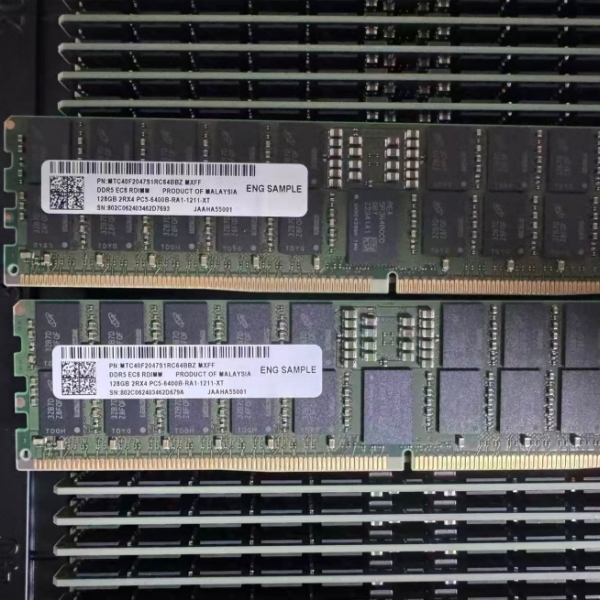
Selecting the right ram memory specifications is critical for building systems that deliver consistent, high-performance computing. Whether you're designing infrastructure for enterprise workloads, data centers, or high-performance computing applications, understanding how ram memory technologies like DDR4 and DDR5 differ—and how speed and latency interact—directly impacts your system's throughput, responsiveness, and cost efficiency. This guide explores the key ram memory specifications that drive performance and helps you make informed decisions aligned with your workload requirements.
ram memory performance is not determined by a single metric. Instead, several specifications work together to define how quickly your system can access, process, and return data. Bandwidth, latency, voltage, timing, and generation all play interconnected roles. Understanding these factors helps you avoid overspending on unnecessary specifications while ensuring your ram memory investment supports your actual performance needs and workload characteristics.
DDR4 vs. DDR5: Core Differences in RAM Memory Architecture
Evolution of RAM Memory Technology
DDR4 ram memory has been the industry standard for over a decade, providing reliable performance for a wide range of applications. DDR4 operates at voltages typically around 1.2V and supports clock speeds ranging from 2133 MHz to 3200 MHz in standard configurations, with overclocked variants reaching higher speeds. The architecture was designed to balance power efficiency with sufficient bandwidth for most enterprise workloads, making DDR4 ram memory a proven, cost-effective choice for many deployments.
DDR5 ram memory represents a generational leap forward, offering doubled bandwidth compared to DDR4 and native clock speeds starting at 4800 MHz. DDR5 ram memory operates at lower voltage (typically 1.1V), reducing power consumption while delivering significantly higher data transfer rates. The DDR5 ram memory architecture includes integrated power management, improved signal integrity, and support for higher capacities per module. These advances make DDR5 ram memory essential for next-generation platforms and workloads requiring maximum bandwidth.
Memory Bandwidth and Data Transfer Rates
Bandwidth is the amount of data your ram memory can transfer per second, measured in gigabytes per second (GB/s). DDR4 ram memory at standard 3200 MHz provides approximately 51.2 GB/s of bandwidth per channel, while DDR5 ram memory at 4800 MHz delivers 76.8 GB/s per channel. For applications processing large datasets—such as machine learning, database management, or high-frequency computing—higher ram memory bandwidth directly translates to improved throughput and reduced bottlenecks. The generational jump in DDR5 ram memory bandwidth is particularly beneficial for workloads that demand sustained data movement.
Speed and Frequency: Impact on System Responsiveness
Understanding Clock Speed in RAM Memory
Clock speed, measured in megahertz (MHz), determines how many operations your ram memory completes per second. Faster ram memory speed enables quicker data access and reduced wait cycles for the processor. DDR4 ram memory frequencies commonly range from 2133 MHz to 3200 MHz in standard configurations, while DDR5 ram memory begins at 4800 MHz and extends beyond 6400 MHz in specialized configurations. However, the relationship between ram memory speed and real-world performance is not linear; gains depend heavily on your processor's architecture, the application's sensitivity to memory bandwidth, and overall system tuning.
When selecting ram memory speed, balance the cost premium against your workload's actual demands. General-purpose enterprise applications may see minimal performance improvement with maximum-speed ram memory, while latency-sensitive applications or those with high memory bandwidth requirements will benefit significantly. Overclocking ram memory speed beyond JEDEC standards is possible but introduces stability risks and voids warranty in many scenarios, so validated ram memory speed specifications from your OEM are preferred for production systems.
Frequency Validation and Processor Compatibility
Not all ram memory frequency specifications are equally supported across all processors. Your processor's memory controller determines which ram memory speeds it can reliably handle. Modern processors like Intel Xeon Scalable and AMD EPYC have validated ram memory speed ranges that balance performance and stability. Always consult your processor's official ram memory speed support documentation to ensure compatibility. Using unsupported ram memory speed configurations can trigger system instability, data corruption, or performance degradation despite the ram memory module's technical capability.
Latency and Timing: The Hidden Performance Driver
What Latency Means for RAM Memory Performance
Latency measures the time delay between a request to access data in ram memory and the delivery of that data, typically expressed in nanoseconds or clock cycles. CAS latency (Column Address Strobe latency) is the most commonly cited ram memory latency metric, representing the number of clock cycles between the column address command and the return of data. DDR4 ram memory typically features CAS latencies between 15 and 21 cycles, while DDR5 ram memory starts at 32 to 38 cycles due to higher operating frequencies. A lower ram memory latency number means faster individual memory access, which benefits applications with random or unpredictable access patterns.
The interplay between ram memory speed and latency matters more than either metric alone. DDR5 ram memory with a CAS latency of 40 at 6000 MHz can deliver lower absolute access time than DDR4 ram memory with CAS latency 16 at 3200 MHz, despite the higher cycle count. Absolute latency in nanoseconds is calculated as (CAS latency ÷ frequency in MHz) × 1000. This relationship means that optimizing ram memory requires understanding both the frequency and timing specifications together, not prioritizing one metric in isolation.
Timing Profiles and Real-World Impact
Beyond CAS latency, complete ram memory timing includes RAS-to-CAS delay (tRCD), RAS precharge time (tRP), and active-to-precharge time (tRAS). These additional ram memory timing parameters define secondary access patterns and refresh cycles. Aggressive ram memory timing profiles reduce latency but consume more power and generate more heat. For production systems, conservative ram memory timing settings validated by your equipment manufacturer provide the best balance between performance and reliability. Custom ram memory timing tuning in overclocked environments requires thorough stress testing and is generally not recommended for mission-critical infrastructure.
Practical Selection Criteria for Your Workload
Matching RAM Memory Specs to Enterprise Applications
Database systems, analytics platforms, and high-performance computing benefit from maximum ram memory bandwidth, making DDR5 ram memory an attractive upgrade. Machine learning workloads with large batch sizes profit from both higher ram memory bandwidth and capacity. Virtualization and cloud infrastructure have more flexible ram memory requirements; DDR4 ram memory remains effective while DDR5 ram memory offers headroom for future growth. Real-time trading, HPC simulations, and latency-sensitive applications demand both high ram memory speed and low latency, making validated DDR5 ram memory specifications increasingly valuable.
When evaluating ram memory specifications for your specific use case, benchmark your actual workload rather than optimizing for theoretical metrics. Monitor memory bandwidth utilization, access latency distribution, and application response times under realistic load. Many organizations discover that their ram memory performance bottleneck is not memory access speed but rather insufficient capacity or suboptimal processor cache utilization. This insight can direct investments more effectively than selecting maximum-specification ram memory without understanding your workload's actual behavior patterns.
Cost-Performance Trade-offs in RAM Memory Selection
DDR4 ram memory remains cost-effective for systems not yet requiring DDR5 processors, offering proven reliability and broad compatibility. DDR5 ram memory commands a premium due to newer manufacturing processes, higher performance, and integration of advanced features like power management and error correction enhancements. The decision to invest in DDR5 ram memory should reflect your system's lifespan, expected workload evolution, and total cost of ownership including refresh cycles. Many organizations find that staying with current-generation DDR4 ram memory provides sufficient performance while deferring DDR5 ram memory adoption to the next platform refresh.
FAQ
What is the difference between DDR4 and DDR5 RAM memory?
DDR5 ram memory offers doubled bandwidth, higher frequency support, lower voltage operation, and integrated power management compared to DDR4 ram memory. DDR5 ram memory starts at 4800 MHz with approximately 76.8 GB/s bandwidth per channel, while DDR4 ram memory peaks at 3200 MHz with around 51.2 GB/s. DDR5 ram memory operates at 1.1V versus DDR4 ram memory's 1.2V, reducing power consumption. However, DDR4 ram memory remains cost-effective and compatible with established systems, making it suitable for applications that don't require maximum bandwidth.
Does faster RAM memory speed always mean better performance?
Not necessarily. ram memory speed improvements benefit primarily workloads with high memory bandwidth demands, such as analytics, scientific computing, and machine learning. General-purpose applications may see negligible performance gains from faster ram memory speed if the processor cache utilization is inefficient or the application is CPU-bound rather than memory-bound. The cost premium for maximum-specification ram memory often exceeds the performance return for standard enterprise workloads. Benchmark your specific application with your proposed ram memory configuration to make an informed speed selection.
How do I choose between latency and speed for my RAM memory?
Evaluate the absolute latency in nanoseconds rather than comparing CAS latency cycles alone. Calculate absolute latency as (CAS latency ÷ frequency in MHz) × 1000 to compare across different ram memory generations fairly. For latency-sensitive workloads like real-time trading or HPC, prioritize validated ram memory configurations from your equipment manufacturer that optimize both speed and latency. For capacity-driven workloads, ram memory bandwidth typically matters more than individual access latency. Always validate your ram memory choices through testing with your actual applications and performance monitoring under realistic load conditions.
