
 EN
EN
Choosing the right data center switch is one of the most consequential infrastructure decisions a network engineer or IT manager can make. In high-bandwidth, low-latency environments, the wrong data center switch specification can create bottlenecks, increase packet loss, and undermine service-level agreements. Understanding which specifications truly matter helps organizations invest wisely and build networks that scale reliably under pressure.
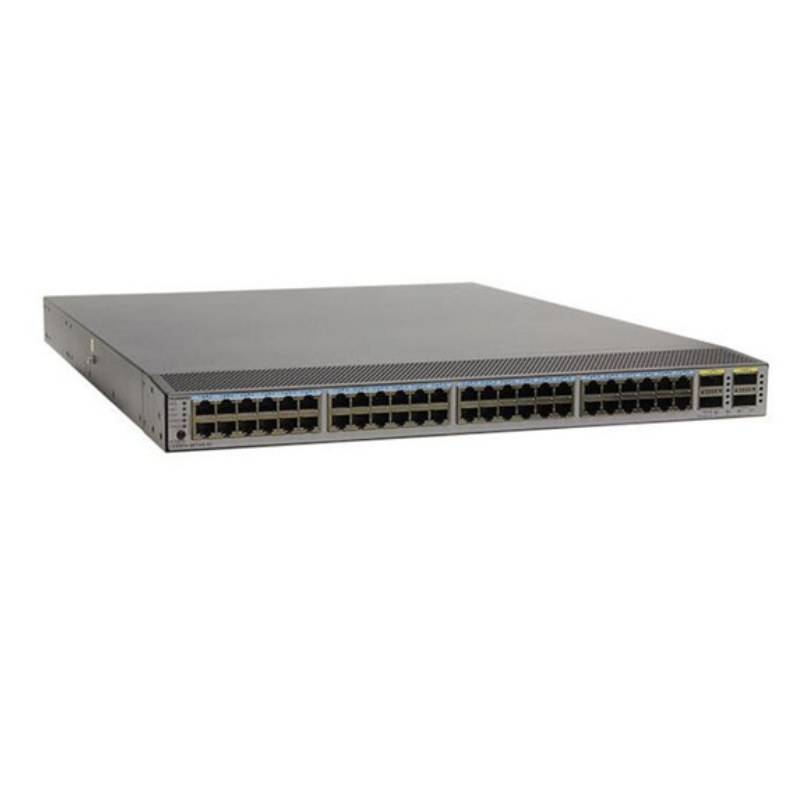
A data center switch built for demanding workloads must deliver consistent throughput, minimal forwarding delay, and deep buffer capacity. Whether you are designing a spine-leaf fabric, a hyperconverged infrastructure layer, or a high-frequency trading network, each data center switch you select must meet precise performance benchmarks. This article breaks down the critical specifications to evaluate before deploying any data center switch in a high-bandwidth, low-latency environment.
Throughput and Port Density Specifications
Switching Capacity and Forwarding Rate
The switching capacity of a data center switch defines the total bandwidth it can handle simultaneously across all ports. Measured in terabits per second, switching capacity determines whether a data center switch can handle aggregated traffic from dozens of high-speed servers without congestion. A data center switch with insufficient switching capacity will drop packets under peak load, which is unacceptable in latency-sensitive applications such as real-time analytics or financial systems.
Forwarding rate, expressed in millions of packets per second, is equally important. A data center switch must forward packets at line rate across all active ports to avoid introducing latency from queuing delays. When evaluating a data center switch, confirm that the forwarding rate supports wire-speed performance at both 64-byte and 1518-byte frame sizes, since small-packet forwarding stress-tests the switching ASIC more intensely than large frames.
Port Speed and Density
Modern data center switch deployments commonly require 25GbE, 100GbE, or 400GbE port speeds to support high-bandwidth server and uplink connections. A data center switch with higher port density reduces the number of switches required in the fabric, which simplifies cabling and lowers total cost of ownership. Port density directly affects how many servers or top-of-rack switches a single data center switch can serve without adding additional aggregation hardware.
For spine-layer deployments, a data center switch offering multiple 100GbE or 400GbE uplink ports provides the aggregation bandwidth necessary to prevent oversubscription. Oversubscription ratios on a data center switch should be carefully matched to the actual traffic profile of the workload, since a data center switch with a high oversubscription ratio may perform poorly for east-west traffic in virtualized or containerized environments.
Latency and Buffer Architecture
Cut-Through vs. Store-and-Forward Switching
Latency is perhaps the most scrutinized specification of any data center switch used in time-sensitive environments. A data center switch operating in cut-through mode begins forwarding a frame before it is fully received, reducing latency to as little as a few hundred nanoseconds. Store-and-forward mode on a data center switch reads the entire frame before forwarding, adding microseconds of latency but enabling full error checking. For low-latency workloads, selecting a data center switch that supports cut-through switching is a practical advantage.
The forwarding latency of a data center switch should be measured under full load conditions, not just in idle benchmarks. A data center switch that achieves low latency at 10% utilization but degrades significantly at 80% or 90% utilization will fail to meet SLA requirements during peak traffic periods. Always request per-port latency measurements from data center switch vendors across varying traffic loads.
Buffer Size and Traffic Management
Buffer architecture defines how a data center switch handles traffic bursts without dropping packets. A data center switch with shallow buffers may deliver very low average latency but will drop packets during microbursts, which are common in high-bandwidth storage or HPC traffic patterns. Deep-buffer data center switch designs sacrifice a small amount of average latency to absorb transient congestion and prevent tail-drop events.
Quality of service features on a data center switch allow traffic prioritization so that latency-sensitive flows receive preferential forwarding. A data center switch supporting weighted round-robin or strict-priority queuing gives administrators granular control over how different traffic classes are treated. Evaluating the QoS depth and flexibility of a data center switch is essential when the network carries a mix of storage, voice, and compute traffic simultaneously.
Resilience, Scalability, and Management Features
Redundancy and High Availability
A production-grade data center switch must support hot-swappable power supplies and fan modules to maintain uptime during hardware servicing. Redundant supervisor modules on a chassis-based data center switch allow the control plane to fail over without disrupting the forwarding plane, protecting against planned and unplanned outages. A data center switch that supports non-stop forwarding and graceful restart ensures that routing protocol convergence does not interrupt traffic flow during supervisor switchover events.
Link aggregation and fast failover capabilities are also critical for any data center switch in a redundant fabric. A data center switch with support for ECMP, MLAG, or similar multi-pathing technologies allows traffic to be load-balanced across multiple uplinks simultaneously, eliminating single points of failure. These features make a data center switch far more resilient than relying on a single active uplink path.
Automation and Programmability
Modern data center environments demand a data center switch that supports automation through open APIs, NETCONF, YANG models, or telemetry streaming. A data center switch with strong programmability enables faster provisioning, real-time monitoring, and integration with orchestration platforms. The ability to collect streaming telemetry from every data center switch in the fabric gives network operations teams the visibility needed to detect congestion, asymmetric routing, and hardware anomalies before they impact applications.
Segment routing, VXLAN, and EVPN support are also increasingly expected from any enterprise data center switch deployed in software-defined or multi-tenant environments. A data center switch that supports these overlay and underlay technologies can participate in dynamic fabric automation, reducing manual configuration overhead and enabling faster provisioning of new workloads across the infrastructure.
FAQ
What switching capacity should a data center switch have for 100GbE deployments?
For a 100GbE data center switch deployment, the switching capacity should be sufficient to support full duplex line-rate traffic across all ports simultaneously. A 48-port 100GbE data center switch requires a minimum switching capacity of approximately 9.6 Tbps to avoid oversubscription at the switch level. Always verify that the data center switch ASIC supports non-blocking architecture for the specific port configuration you plan to deploy.
How does buffer size affect data center switch performance during traffic bursts?
Buffer size directly determines how well a data center switch absorbs short-lived traffic bursts without dropping packets. A data center switch with too little buffer memory will experience tail-drop events during microbursts, increasing retransmission rates and application latency. For storage or HPC workloads, selecting a data center switch with larger on-chip or external DRAM buffers significantly improves tolerance for bursty traffic patterns.
Is a data center switch with cut-through mode always better for low-latency environments?
Cut-through mode on a data center switch reduces forwarding latency by starting frame transmission before the full frame is received. However, a data center switch in cut-through mode may propagate corrupt frames when link errors are present, since error checking is bypassed. For most low-latency environments, a data center switch that supports adaptive switching, which falls back to store-and-forward when error rates rise, offers the best balance between low latency and traffic integrity.
