
 EN
EN
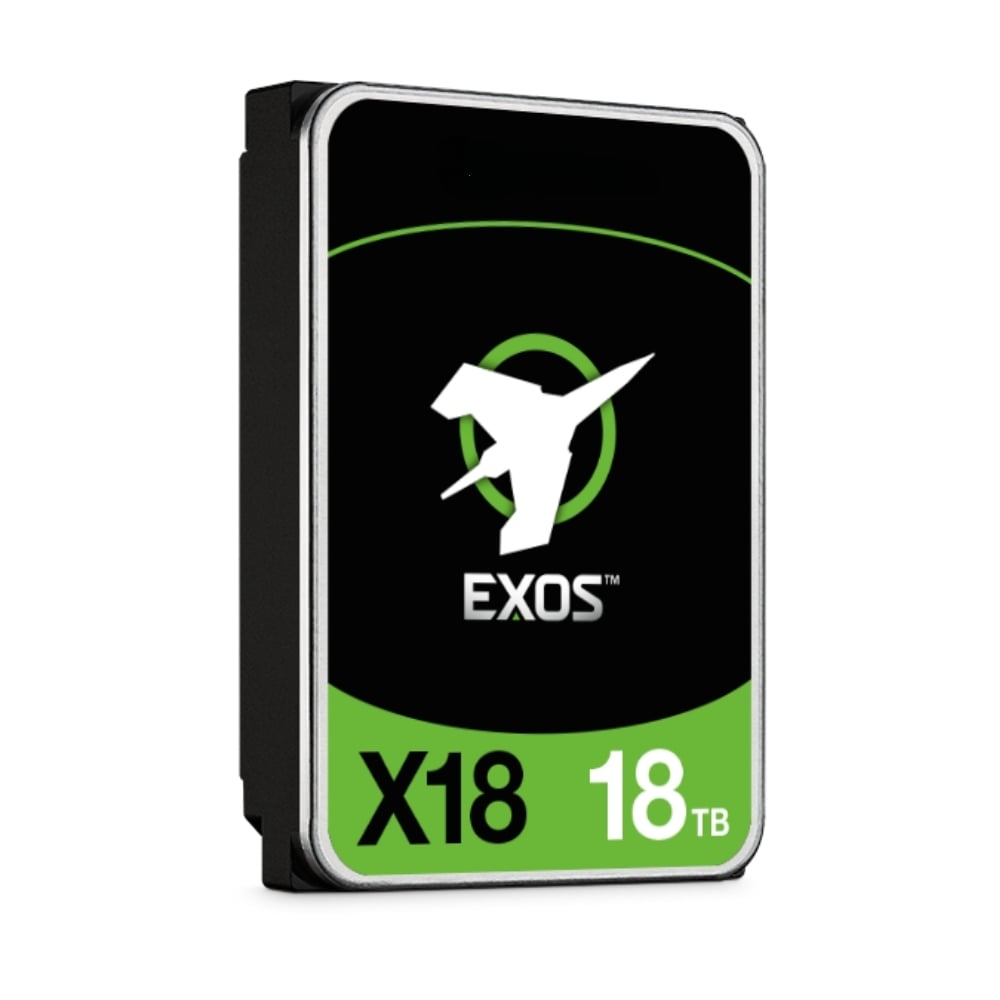
Selecting the right hdd technology is one of the most critical decisions in building a scalable data center or enterprise storage infrastructure. Organizations today face a choice between SATA, SAS, and NVMe hdd solutions, each offering distinct advantages in speed, reliability, and capacity. The decision to deploy one hdd type over another directly impacts system performance, operational costs, and long-term growth potential. Understanding how each hdd category performs under specific workloads enables infrastructure teams to balance capacity requirements with throughput demands while maintaining a sustainable total cost of ownership.
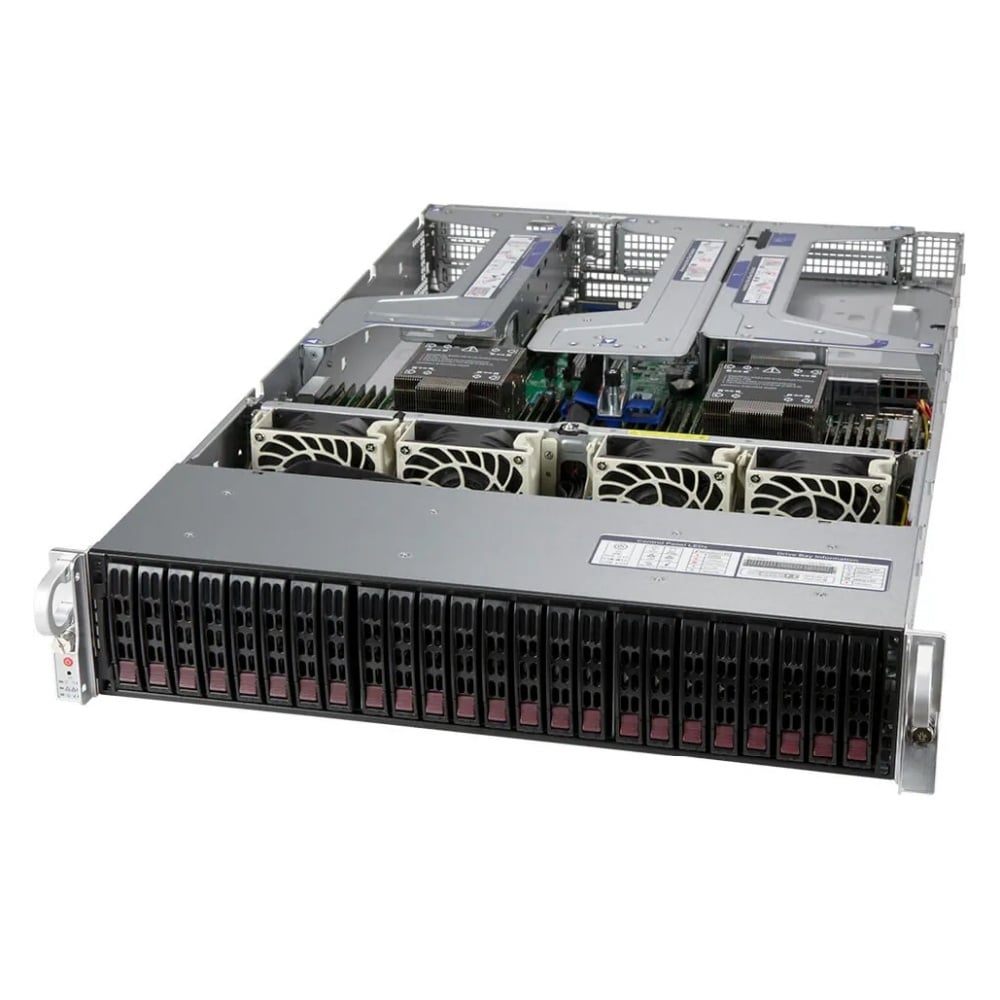
The emergence of NVMe technology has fundamentally reshaped expectations around hdd responsiveness and throughput, while SATA hdd drives remain the foundation of cost-effective bulk storage. SAS hdd options bridge the gap, offering enterprise-grade reliability and command queuing advantages. This guide walks through the technical characteristics, use-case alignment, and selection frameworks that help you match each hdd type to your specific performance and capacity objectives.
Understanding Core Performance Characteristics of Each HDD Type
SATA HDD Architecture and Performance Profile
SATA hdd drives use the Serial ATA protocol, delivering sequential data rates typically between 150 and 272 MB/s depending on the specific hdd model and generation. A standard SATA hdd operates with limited command queuing and single-threaded I/O optimization, making it well-suited for linear read-write workloads rather than heavily randomized access patterns. The simplicity of the SATA hdd architecture contributes to its widespread adoption, lower manufacturing complexity, and competitive pricing in the bulk storage market. For most general-purpose applications where sustained throughput matters more than latency, a SATA hdd remains a dependable and economical choice.
SAS HDD Reliability and Concurrent Command Handling
SAS hdd technology operates on the Serial Attached SCSI protocol, supporting up to 32 concurrent command queuing compared to SATA hdd's single-command model. A SAS hdd typically achieves similar or slightly higher data rates than equivalent SATA hdd models, but the key differentiator lies in the hdd's ability to handle rapid command switching without performance degradation. Enterprise-grade SAS hdd drives are designed for 24/7 continuous operation in demanding environments, featuring superior error recovery mechanisms and built-in redundancy features that prioritize data integrity. When workloads involve heavy random I/O or multi-threaded database operations, a SAS hdd's architectural advantages significantly outperform a comparable SATA hdd in real-world scenarios.
NVMe HDD Technology and Performance Acceleration
Why NVMe HDD Dominates High-Speed Applications
NVMe hdd solutions leverage the NVMe protocol over PCIe lanes, delivering sequential throughput ranging from 3500 to 7000 MB/s or higher, depending on the specific NVMe hdd generation and interface standard. An NVMe hdd eliminates the protocol overhead inherent in SATA hdd and SAS hdd designs, enabling microsecond-level latencies crucial for real-time analytics, machine learning inference, and transactional databases. NVMe hdd technology supports native parallelization with multiple submission and completion queues, allowing applications to submit thousands of I/O operations without waiting for hdd acknowledgment of prior commands. For workloads where per-operation latency directly impacts user experience or business outcomes, an NVMe hdd is fundamentally superior to both SATA hdd and SAS hdd technologies.
NVMe HDD Capacity Considerations and Cost Factors
While NVMe hdd drives have traditionally been more expensive per gigabyte than SATA hdd or SAS hdd options, capacity offerings have expanded rapidly, with enterprise NVMe hdd models now available in multi-terabyte configurations. The power efficiency of an NVMe hdd is superior, reducing operational cooling and electrical costs in large-scale deployments where hundreds or thousands of hdd drives run continuously. Organizations deploying NVMe hdd technology across their infrastructure often recoup the higher initial investment through reduced power consumption, improved application responsiveness, and faster data processing pipelines. When calculating the true total cost of ownership, an NVMe hdd frequently justifies its premium over SATA hdd alternatives in performance-critical roles.
Matching HDD Selection to Workload and Capacity Requirements
SATA HDD for Bulk Archive and Sequential Storage
SATA hdd technology excels in scenarios where capacity density and cost-per-terabyte are primary constraints, such as backup repositories, media libraries, and cold-tier archival systems. A SATA hdd is optimized for workloads that read or write large blocks sequentially, leveraging the hdd's sustained throughput advantages without requiring rapid command switching. Organizations managing petabyte-scale data lakes with primarily linear access patterns find that SATA hdd deployments deliver the lowest infrastructure investment while meeting performance thresholds. When your hdd selection prioritizes maximizing raw capacity within a fixed budget, SATA hdd remains the economically dominant choice.
SAS HDD for Enterprise Databases and RAID-Intensive Systems
SAS hdd solutions provide the reliability, concurrent command handling, and error recovery necessary for mission-critical databases, ERP systems, and shared storage arrays where data integrity cannot be compromised. A SAS hdd's 24/7 duty cycle rating, enhanced MTBF specifications, and superior thermal design make it the standard choice for RAID configurations supporting hundreds of concurrent user connections. Enterprise storage administrators consistently select SAS hdd drives because the hdd architecture minimizes rebuild times during drive failures, reducing the window of vulnerability in degraded arrays. When your hdd requirements demand uptime guarantees and multi-threaded workload handling, SAS hdd represents the enterprise-proven solution.
NVMe HDD for Analytics, AI, and Real-Time Processing
NVMe hdd technology has become essential for organizations running machine learning training pipelines, real-time data warehouses, and high-frequency trading systems where latency measured in milliseconds creates competitive advantage. An NVMe hdd can sustain hundreds of thousands of I/O operations per second, enabling algorithms to access training data without pipeline stalls that would degrade model training throughput. Financial institutions, research organizations, and cloud providers increasingly deploy NVMe hdd solutions because the hdd's parallelization capabilities and microsecond latencies compress processing timelines significantly. For workloads where every millisecond of reduced latency translates to business value, NVMe hdd selection becomes strategically justified despite higher per-unit costs.
FAQ
Can I mix SATA hdd, SAS hdd, and NVMe hdd in the same server?
Yes, many modern enterprise servers support simultaneous deployment of multiple hdd types through different controller interfaces and PCIe slots. A well-designed infrastructure strategy often uses tiered storage where NVMe hdd handles hot-access data, SAS hdd manages transactional workloads, and SATA hdd provides bulk archival capacity. However, ensure your server's hdd controller configuration, driver support, and BIOS firmware handle mixed hdd environments to avoid compatibility issues or performance bottlenecks during the hdd initialization process.
How do I determine whether my workload needs NVMe hdd over SAS hdd?
Profile your actual I/O patterns using monitoring tools to measure random read-write ratios, queue depth, and latency sensitivity. If your hdd workload shows sustained queue depths above 8–16 or requires sub-10-millisecond latencies, NVMe hdd will deliver measurable improvements over SAS hdd. Conversely, if your hdd analysis shows primarily sequential access or queue depths under 4, a SAS hdd provides sufficient performance at lower total cost than NVMe hdd alternatives.
What capacity ranges are available for each hdd type today?
SATA hdd models commonly reach 20 TB, SAS hdd drives are available up to 18 TB, and NVMe hdd solutions now span 1 TB to 8 TB in mainstream enterprise lines. Capacity availability varies by manufacturer and evolves rapidly, so consult current supplier specifications when planning hdd procurement. Your hdd selection should account for anticipated growth beyond current capacity requirements to minimize future replacement cycles and infrastructure disruption.
