
 EN
EN
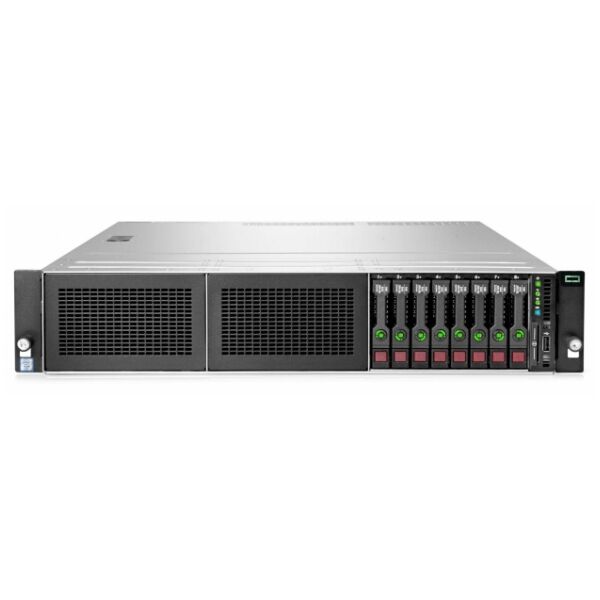
Planning storage capacity for virtualized environments is one of the most strategically demanding challenges facing IT infrastructure teams today. As virtual machine density increases and data volumes multiply at an unprecedented pace, the pressure on underlying storage systems grows exponentially. Whether you are managing a mid-sized enterprise data center or scaling a cloud-adjacent workload platform, getting your storage capacity planning right from the start determines whether your infrastructure will support business agility or become its biggest bottleneck. The convergence of virtualization overhead, snapshot retention, rapid provisioning requirements, and unpredictable growth patterns makes it essential to adopt storage solutions that offer both performance headroom and scalability by design. A well-chosen NVMe all-flash array has become a foundational component of this planning process for organizations that cannot afford latency-driven performance degradation.
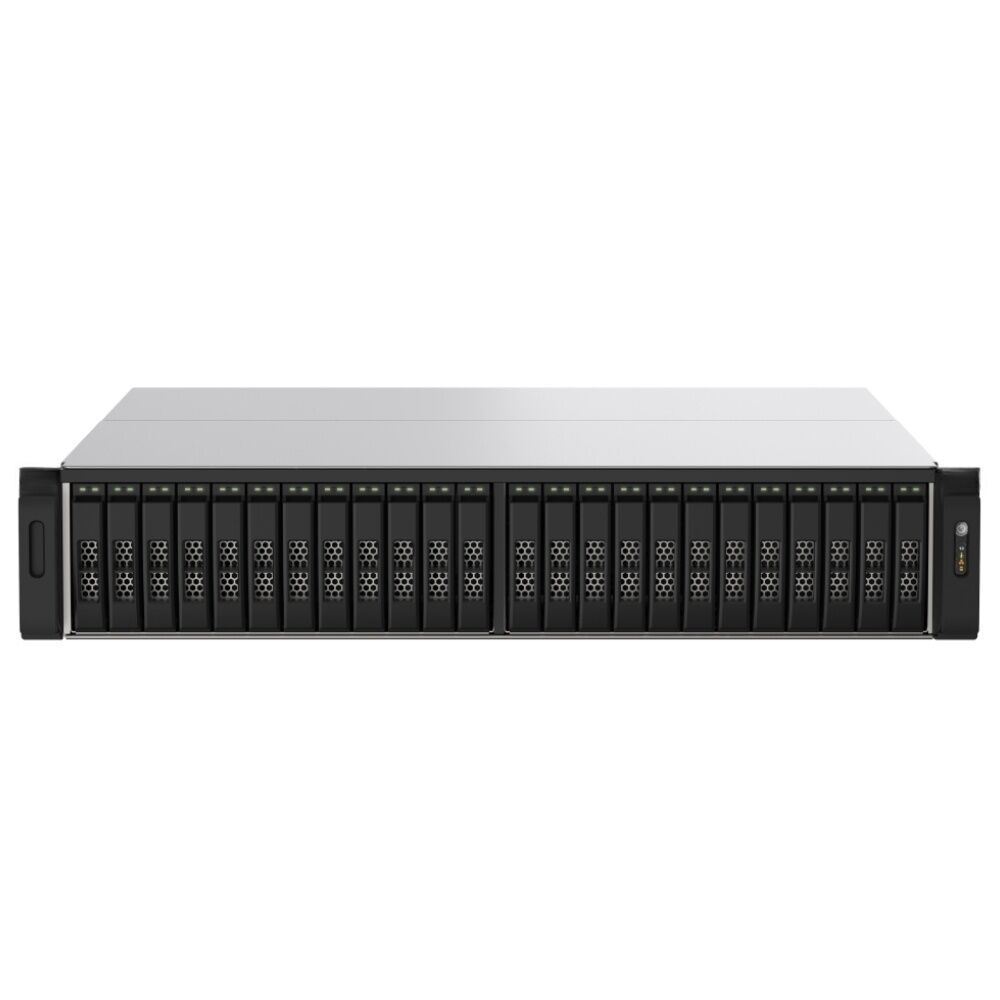
The challenge does not end with selecting a high-capacity platform. Effective capacity planning requires a structured methodology that accounts for current workload profiles, projected growth rates, VM sprawl management, data reduction ratios, and the non-negotiable need for consistent I/O performance under load. An NVMe all-flash array delivers the low-latency throughput that virtualized workloads demand, but even the most powerful hardware investment will fail to deliver its full value without deliberate, data-informed planning. This article walks through the critical dimensions of storage capacity planning for virtualized environments experiencing rapid data growth, offering a practical framework that infrastructure architects and storage administrators can apply directly to their planning cycles.
Understanding the Unique Storage Demands of Virtualized Environments
VM Density and Its Impact on Storage I/O Profiles
One of the most underestimated factors in storage capacity planning is how virtual machine density reshapes I/O demand patterns. In a physical server environment, each host generates a predictable I/O footprint. In virtualized environments, however, dozens or even hundreds of VMs compete for the same storage resources simultaneously, creating I/O contention that can cripple traditional spinning disk arrays. Each VM generates its own read and write operations, metadata transactions, and snapshot activity, all of which must be serviced in parallel without introducing latency spikes that degrade application performance.
An NVMe all-flash array is purpose-built to handle this kind of concurrent I/O pressure. Unlike SATA or SAS-based systems, NVMe drives communicate directly over PCIe lanes, eliminating the protocol translation overhead that introduces latency in legacy storage architectures. When planning capacity for a high-density virtualized environment, your baseline must account not just for raw gigabytes but for the sustained IOPS and throughput that your combined VM workloads will generate at peak demand. Underestimating this figure is one of the most common and costly mistakes in enterprise storage planning.
Capturing accurate baseline metrics before committing to a capacity plan is therefore non-negotiable. Tools that monitor VM-level I/O histograms, latency percentiles, and queue depths over representative time periods give planners the data they need to right-size their NVMe all-flash array deployment. A capacity plan built on peak-day I/O data is far more reliable than one derived from average utilization figures alone.
Snapshot Overhead and Thin Provisioning Realities
Virtualized environments rely heavily on snapshots for data protection, rapid recovery, and test-and-development workflows. While snapshots are invaluable, they introduce storage overhead that many planners fail to account for accurately. Each snapshot retains a copy of changed data blocks, and as VM workloads evolve, snapshot chains can consume significantly more space than the original VM footprints suggest. In environments with aggressive backup windows and multiple daily snapshots per VM, this overhead can easily represent 30 to 60 percent of total consumed capacity.
Thin provisioning compounds this complexity. Virtual disks are often provisioned at sizes far exceeding their immediate actual usage, giving administrators flexibility but obscuring true consumed capacity until alarms trigger. An NVMe all-flash array that supports inline data deduplication and compression can dramatically reduce the physical space consumed by both VM data and snapshot chains, but planners must understand that data reduction ratios vary significantly by workload type. Databases, already-compressed media files, and encrypted datasets yield far lower reduction ratios than general-purpose virtual desktops or file servers.
Capacity models that assume a blanket 3:1 or 4:1 reduction ratio across all workloads will produce misleading projections. Instead, planners should segment workloads by data type and apply conservative, workload-specific reduction estimates when sizing an NVMe all-flash array deployment for a mixed virtualized environment.
Building a Scalable Capacity Planning Framework for Rapid Data Growth
Establishing Growth Rate Baselines and Projection Models
Rapid data growth is not a uniform phenomenon across all workload categories. Storage planners must resist the temptation to apply a single annual growth percentage to the entire storage estate. Operational databases may grow modestly in structured data volume while generating large volumes of transaction logs. Virtualized application servers may remain stable in primary footprint but trigger explosive snapshot growth during active development cycles. Analytics and telemetry platforms can exhibit exponential unstructured data accumulation that overwhelms storage systems designed primarily for transactional workloads.
An effective capacity planning framework begins with a segmented growth rate analysis. Each major workload category should have its own growth projection derived from at least six to twelve months of historical consumption data. These per-category projections are then combined with a conservative buffer—typically fifteen to twenty percent above projected maximum—to determine the required usable capacity for each planning horizon. When layering this analysis over an NVMe all-flash array platform, planners should also factor in the system's effective capacity after data reduction rather than relying solely on raw drive capacity figures.
Projection models should be revisited quarterly at minimum, particularly in environments undergoing digital transformation initiatives, cloud repatriation projects, or significant application modernization efforts. Any of these business drivers can dramatically accelerate the consumption trajectory and invalidate assumptions made even six months prior. An NVMe all-flash array with modular expansion capabilities provides the architectural flexibility to respond to these shifts without requiring wholesale platform replacement.
Defining Capacity Tiers and Performance Boundaries
Not every byte of virtual machine data demands the same performance characteristics, and a single-tier capacity strategy is rarely the most cost-effective approach. Storage tiering within a virtualized environment allows administrators to align data placement with actual performance requirements rather than defaulting to a one-size-fits-all model. Active VM working sets, frequently accessed databases, and latency-sensitive application logs belong on the highest-performance NVMe all-flash array tier, where sub-millisecond response times and high sustained throughput are guaranteed.
Less frequently accessed data, such as VM templates, archive snapshots, or historical log repositories, can be directed to lower-cost secondary tiers without performance penalty. Automated storage tiering policies, available on modern NVMe all-flash array platforms, can manage this placement dynamically based on observed access patterns, reducing administrative overhead while optimizing cost per gigabyte across the total storage estate. Defining the boundaries between tiers—both in terms of performance thresholds and data age policies—is a critical deliverable of the capacity planning process.
Failure to define these boundaries clearly leads to tier creep, where all data migrates toward the highest-performance tier by default, rapidly exhausting flash capacity and inflating costs beyond planned budgets. Governance around tiering policies should be established early, reviewed regularly, and enforced through automated tooling rather than relying on manual administrator judgment.
Aligning NVMe All-Flash Array Selection with Virtualization Platform Requirements
Protocol Compatibility and Integration Depth
Choosing an NVMe all-flash array for a virtualized environment requires more than evaluating raw performance specifications. The array must integrate natively with the hypervisor platform in use—whether that is VMware vSphere, Microsoft Hyper-V, or an open-source KVM-based environment—to enable features such as vStorage APIs for Array Integration (VAAI), automated datastore management, and VM-aware snapshot orchestration. Without these integration points, administrators are forced to manage storage and virtualization layers independently, introducing operational inefficiency and increasing the risk of configuration mismatches.
NVMe-oF (NVMe over Fabrics) support extends the performance advantages of NVMe all-flash array deployments across the network fabric, allowing shared access across multiple hypervisor hosts without the latency penalties associated with traditional iSCSI or Fibre Channel protocols. As virtualized environments scale to larger host counts and higher VM densities, this fabric connectivity becomes a critical differentiator in sustaining the performance characteristics that make NVMe all-flash array technology valuable in the first place.
Capacity planners should verify protocol roadmap compatibility as part of the selection process, ensuring that the chosen NVMe all-flash array platform can support evolving connectivity requirements as the virtualized environment grows. Investing in a platform that requires expensive protocol gateway additions to support future connectivity needs undermines the total cost of ownership advantages that all-flash architectures are intended to deliver.
High Availability and Data Resilience Considerations
Virtualized environments consolidate many applications and services onto shared storage, meaning that a storage failure event carries far greater blast radius than a single physical server failure. Capacity planning for virtualized environments must therefore incorporate high availability and data resilience as first-class planning dimensions rather than afterthoughts. RAID configurations, dual-controller redundancy, hot spare capacity, and replication overhead all consume raw storage capacity that must be explicitly accounted for in capacity models.
An NVMe all-flash array designed for enterprise virtualized workloads should support RAID configurations optimized for flash media, such as RAID-TEC or triple-parity designs that protect against multiple simultaneous drive failures without requiring excessive capacity overhead. Hot spare drives reserved for automatic RAID rebuild should be included in raw capacity calculations and excluded from usable capacity totals. Replication targets—whether local secondary arrays or remote disaster recovery sites—represent additional capacity requirements that must be modeled separately.
When planning capacity for resilience, a conservative target of no more than seventy to seventy-five percent effective utilization of usable capacity provides the headroom necessary for RAID rebuilds, snapshot bursts, and emergency provisioning without performance degradation. An NVMe all-flash array that sustains full performance under these real-world conditions delivers far more value than a system that degrades under load during precisely the moments when resilience matters most.
Operational Practices That Sustain Long-Term Capacity Health
Capacity Monitoring, Alerting, and Reporting Cadences
Capacity planning is not a one-time event executed at procurement time. It is an ongoing operational discipline that requires structured monitoring, proactive alerting, and regular reporting to remain effective. Storage administrators should configure utilization thresholds on their NVMe all-flash array that trigger escalating alerts well before critical capacity limits are reached—typically at sixty, seventy-five, and eighty-five percent effective utilization. These early warning signals provide the lead time necessary to initiate expansion procurement, migrate workloads to secondary tiers, or reclaim abandoned VM storage before the environment is at risk.
Monthly capacity reports that track consumption trends per workload category, per datastore, and per host cluster allow planners to update growth projection models with current data rather than relying on aging baselines. Trend visualization over rolling twelve-month windows makes it possible to detect acceleration or deceleration in growth rates early enough to adjust procurement timelines accordingly. Most enterprise-grade NVMe all-flash array platforms include built-in analytics and capacity forecasting dashboards that support this reporting function natively.
Establishing a formal capacity review cadence—with clear ownership, escalation paths, and decision authority for expansion approvals—transforms storage capacity management from a reactive fire-fighting activity into a strategic infrastructure governance function. Organizations that embed this discipline into their quarterly IT operations reviews consistently demonstrate better cost efficiency and fewer unplanned performance incidents than those that manage capacity reactively.
VM Lifecycle Governance and Storage Reclamation
One of the most significant capacity growth drivers in virtualized environments is not organic data growth but VM sprawl—the accumulation of provisioned virtual machines that are no longer actively used but continue to consume storage resources. Abandoned development VMs, expired test environments, and orphaned snapshots can collectively represent a substantial fraction of total consumed capacity across enterprise virtualized estates. Without disciplined VM lifecycle governance, planners will continuously overestimate capacity requirements because reclamation opportunities remain invisible.
Implementing a formal VM retirement workflow—including automated identification of idle VMs based on CPU and I/O inactivity metrics, owner notification procedures, and time-bounded archival or deletion policies—directly recovers NVMe all-flash array capacity that would otherwise require procurement of additional hardware. Many organizations discover through their first formal VM lifecycle audit that ten to twenty percent of total provisioned storage is attributable to VMs that have been functionally abandoned for six months or longer.
Reclaimed capacity from VM lifecycle governance should be explicitly credited back to capacity planning models rather than treated as a windfall, ensuring that projections remain accurate and that procurement decisions reflect actual demand trajectories. Combining proactive reclamation with inline data reduction on an NVMe all-flash array maximizes the effective capacity available from each hardware investment and extends refresh cycles substantially.
FAQ
How much capacity buffer should I maintain on an NVMe all-flash array for virtualized workloads?
Industry best practice recommends maintaining a minimum of twenty-five to thirty percent free effective capacity on an NVMe all-flash array supporting virtualized environments. This buffer accommodates RAID rebuild overhead, snapshot growth bursts, rapid VM provisioning events, and the performance characteristics of flash media under high write loads. Operating consistently above seventy-five percent utilization increases the risk of write amplification effects and can degrade latency performance on flash-based storage systems.
Can data deduplication and compression ratios be reliably predicted when planning NVMe all-flash array capacity?
Data reduction ratios are workload-dependent and should be treated as estimates rather than guaranteed values when planning NVMe all-flash array capacity. General-purpose virtual desktops and file server workloads typically achieve higher reduction ratios, while encrypted data, compressed media files, and certain database formats yield minimal reduction benefits. Planners should obtain workload-specific ratio estimates from vendor assessment tools or pilot deployments and apply a conservative discount of twenty to thirty percent to those estimates when building capacity models.
How frequently should storage capacity plans for virtualized environments be reviewed and updated?
For environments experiencing rapid data growth, capacity plans should be formally reviewed and updated on a quarterly basis at minimum. Monthly consumption trend reports fed into updated growth models allow planners to detect trajectory changes early and adjust procurement or reclamation strategies before capacity constraints materialize. Major business events—such as application migrations, organizational growth, or new workload onboarding—should trigger ad hoc capacity reviews regardless of the standard review cadence.
What role does NVMe over Fabrics play in scaling capacity across multiple virtualization hosts?
NVMe over Fabrics extends the low-latency performance of an NVMe all-flash array across a high-speed network fabric to multiple hypervisor hosts simultaneously, enabling shared storage access without the protocol overhead of traditional SAN technologies. This is particularly important in large-scale virtualized environments where many hosts must access the same datastores concurrently. NVMe-oF allows capacity to be centralized on a single NVMe all-flash array platform while delivering consistent sub-millisecond latency to all connected hosts, simplifying capacity management and reducing the total number of storage systems required.
Table of Contents
- Understanding the Unique Storage Demands of Virtualized Environments
- Building a Scalable Capacity Planning Framework for Rapid Data Growth
- Aligning NVMe All-Flash Array Selection with Virtualization Platform Requirements
- Operational Practices That Sustain Long-Term Capacity Health
-
FAQ
- How much capacity buffer should I maintain on an NVMe all-flash array for virtualized workloads?
- Can data deduplication and compression ratios be reliably predicted when planning NVMe all-flash array capacity?
- How frequently should storage capacity plans for virtualized environments be reviewed and updated?
- What role does NVMe over Fabrics play in scaling capacity across multiple virtualization hosts?